Bilibo looks like a colorful plastic shell. The Classic version is big enough for kids to sit in and spin. Some kids spin in it for hours, others use it once and walk away. The Mini fits in small hands for stacking and scooping. The Midi bridges the gap between them. All three share the same philosophy: no buttons, no sounds, no instructions. Just open-ended play that depends entirely on what your child imagines.
These toys are wildly divisive. While some parents report daily use for years others say their kids tried them once and moved on. The difference comes down to whether your child thrives with open-ended materials or prefers toys with clear purposes.
If your child invents games with cardboard boxes and blankets, Bilibo will probably get daily use. If your child prefers toys that “do something,” it’ll collect dust.
At a glance:
Bilibo Classic: Check Current Price
Bilibo Mini: Check Current Price
Bilibo Midi: Check Current Price
Quick Comparison: Classic vs. Mini vs. Midi
| Feature | Classic Bilibo | Mini Bilibo | Midi Bilibo |
|---|---|---|---|
| Size | 16″ x 16″ x 11″ | 5″ x 5″ x 5″ | 11.4″ x 11.4″ x 6.3″ |
| Best Age | 2-7 years | 12 months – 5 years | 2-6 years |
| Main Use | Sitting, spinning, rocking | Hand play, stacking, scooping | Sitting (smaller kids), carrying, pretend play |
| Weight Limit | No stated limit | N/A (hand toy) | 110 lbs |
| Set Size | Single unit | 6-pack | Single unit |
| Primary Play | Full-body movement | Fine motor skills | Bridge between Mini and Classic |
What is Bilibo?
Bilibo is a Swiss-designed toy made by MOLUK, a company specializing in minimalist, open-ended play objects. The concept is simple: give kids a versatile shell-shaped tool and let them decide what it becomes. A turtle shell. A boat. A helmet. A drum. A sand scoop. A spinning seat. The list changes based on who’s playing and when.
The Bilibo family comes in three sizes. Classic Bilibo is the original, large enough for children to sit inside and spin on smooth floors. Mini Bilibo shrinks the concept to hand-sized pieces sold in 6-packs for stacking, nesting, and small-world play. Midi Bilibo launched more recently as a middle option, sized for toddlers who’ve outgrown the Mini but aren’t quite ready for the Classic’s larger footprint.
All versions share the same material: high-density polyethylene (HDPE) plastic. Food-safe, shock-resistant, weather-proof, and fully recyclable. The design intentionally avoids features that dictate play. No batteries, no instructions, no “correct” way to use them.
This philosophy comes from the “loose parts” play theory, where children create meaning through their own interaction rather than following predetermined rules. Some parents love this approach. Others find it frustrating when their child asks “what does it do?” and loses interest without an answer.
Classic Bilibo Review
The original Bilibo Toy and what most people picture when they hear “Bilibo.”
Design & Build
Classic Bilibo measures 16 x 16 x 11 inches. Large enough for most kids ages 2-7 to sit inside comfortably. The shell has a smooth interior for spinning and a textured exterior for grip when carrying. Made from thick HDPE plastic that feels substantial, not flimsy like cheap toys.
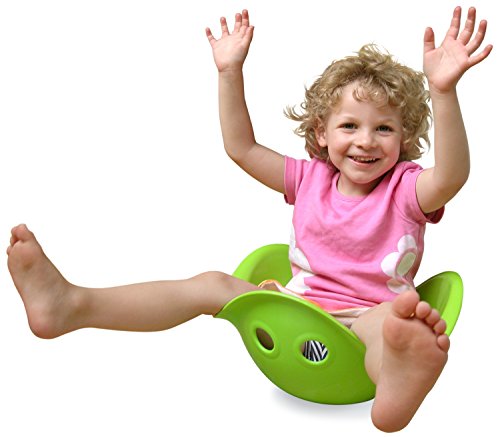
It’s available in multiple colors including blue and yellow, very durable.
How Kids Use It
Various ways kids use Classic Bilibo include:
- Spinning: Kids sit inside and spin on smooth floors.
- Rocking: Flip it upside down and it becomes a rocker.
- Pretend play: Turtle shell, boat, spaceship, rescue helmet, hero mask. The open-ended nature means it transforms based on the game.
- Outdoor use: Sand scooper, water bucket, snow mold, stepping stone. Weather-proof construction holds up.
- Practical purposes: Stool, doll cradle, action figure base etc.
Pros & Cons
What works:
- Exceptionally durable
- Versatile indoor and outdoor
- No weight limit stated
- Food-safe material
- Completely recyclable
- Encourages gross motor skills and active play
What doesn’t:
- Large footprint (16″ diameter takes space)
- Single unit (not a set, unlike Mini)
- Some kids don’t engage without adult modeling
- Not intuitive for children who prefer structured toys
Who Should Get Classic Bilibo
Best for kids ages 2-7 who already show interest in imaginative play. If your child turns cardboard boxes into forts and blankets into capes, Classic Bilibo will probably get use. Physical play kids who enjoy spinning, rocking, and movement will engage more than quiet play kids.
Homes with outdoor space maximize value. The weather-proof construction means it works in sandbox, snow, pool, and yard without damage.
Available Colors & Links
Blue:
Yellow:
Mini Bilibo Review
The hand-sized version. Its sold as a 6-pack in rainbow colors (red, blue, yellow, orange, pink, and green) and Pastel colors )which offer a softer visual option (preferable for nursery aesthetics or calmer play environments).
Design & Build
Each Mini Bilibo measures 5 x 5 x 5 inches. Small enough for toddler hands but large enough to avoid choking hazards for kids 12 months and up. The set weighs 10.56 ounces total. Light, stackable, nestable.
Same HDPE construction as the Classic. Durable, non-toxic, food-safe. The bright solid colors (red, blue, yellow, orange, pink, green) appeal to young kids developing color recognition.
How Kids Use Them
Various ways kids use Mini Bilibo include:
- Stacking and nesting: Basic early motor skill development
- Floating toys: Bath time or pool play (they float like ducks)
- Sand play: Shovels and molds at the beach or sandbox
- Pretend play: Encourages different ways to play with it, including racing cars, spinning tops, candy bowls
- Color sorting: Parents appreciate this learning opportunity
- Integration with other toys: “Can be stacked with other toys,” making them compatible with existing play sets
Pros & Cons
What works:
- Set of 6 means multiple kids can play together
- Smaller size fits easily in toy bins or diaper bags
- Great for fine motor skill development
- Works for younger ages (12 months+) than Classic
- Lower price point than Classic (6 pieces for similar cost)
- Color sorting educational opportunity
What doesn’t:
- Too small for the full-body play Classic offers
- Can get lost easily (small, bright colors blend into toy piles)
- Some parents report less engagement than expected
- Not substitute for Classic if kid wants spinning/rocking
Who Should Get Mini Bilibo
Best for ages 12 months through 5 years. Younger toddlers developing fine motor skills. Kids who enjoy stacking, sorting, and small-world play. Parents wanting open-ended toys for bath time, sandbox, or travel.
Also good as a starter set. Lower financial risk lets you test whether your child engages with Bilibo’s open-ended philosophy before investing in the larger Classic.
Choose rainbow if: You want high-contrast colors for visual stimulation and color sorting learning
Choose pastel if: You prefer calmer aesthetics or want colors that blend with neutral home decor
Check Mini Bilibo Rainbow 6-Pack on Amazon Check Mini Bilibo Pastel 6-Pack on AmazonMidi Bilibo Review
The newest addition to the Bilibo line. Sized between Mini and Classic to bridge the gap.
Design & Build
Midi Bilibo measures 11.4 x 11.4 x 6.3 inches. Smaller than the Classic but still large enough for toddlers and young kids to sit in. The 110-pound weight limit confirms it’s designed for sitting play, unlike the hand-sized Mini.
Available in six colors: green, red, yellow, blue, orange, and purple. Same HDPE construction as other Bilibo products. Food-safe, shock-resistant, weather-proof, recyclable.
The compact size makes Midi more portable than Classic. Light enough for toddlers to carry around independently. As the description states “it’s spacious enough for little ones to sit, spin, and wobble, yet compact and lightweight so it can go just about anywhere.”
How Kids Use It
Midi serves as a stepping stone for kids who’ve outgrown Mini hand play but aren’t quite ready for Classic’s larger size. The Midi fits their developmental stage.
Common uses mirror Classic but scaled down:
- Sitting and spinning (smaller radius than Classic)
- Superhero helmet (fits on head better than Classic for toddlers)
- Sand scooper (larger capacity than Mini)
- Doll cradle (sized appropriately for 12-18 inch dolls)
- Boat for pretend play
- Stepping stone for balance activities
- Cereal bowl for pretend kitchen play
- Action figure hideout
Pros & Cons
What works:
- Fills genuine gap between Mini and Classic sizes
- More portable than Classic (easier for toddlers to move)
- Still allows sitting/spinning play (unlike Mini)
- Clear weight limit (110 lbs) gives parents confidence
- Available in 6 colors
- Works for ages 2-6
What doesn’t:
- Newer product (fewer long-term customer reviews available)
- May be too small for kids over 5-6 years
- Single unit like Classic (not a set)
- Might be redundant if you already own both Mini and Classic
Who Should Get Midi Bilibo
Best for ages 2-6, particularly kids on the younger end who find Classic too large. Toddlers developing gross motor skills who need something between hand toys and full sitting toys. Good option for smaller homes where Classic’s 16-inch footprint is too much.
Also works well as a first Bilibo for testing engagement before committing to Classic’s larger size and cost.
Available Colors & Links
Green:
Red:
Yellow:
Blue:
Orange:
Purple:
Size Selection Guide
Here’s how to decide which Bilibo toy is right for your child.
By Age
12-24 months: Mini Bilibo (either rainbow or pastel). Hand-sized pieces support fine motor development. Stacking, nesting, and bath play work at this stage. Classic and Midi are too large for meaningful engagement yet.
2-3 years: Midi Bilibo or Classic, depending on size and play style. Active toddlers who love spinning will engage with either. Midi works better for smaller kids or those still developing balance. Mini remains useful for hand play and sandbox.
3-5 years: Classic Bilibo for full sitting, spinning, rocking play. Peak imaginative play years mean they’ll invent the most uses. Midi works if space is limited. Mini can complement for multi-kid play or travel.
5-7 years: Classic Bilibo if they haven’t outgrown it physically. Engagement depends on whether imaginative play continues. Some kids this age prefer more complex toys. Mini and Midi likely feel too small by this point.
By Play Style
High-energy, movement-seeking kids: Classic or Midi for sitting, spinning, rocking, balance challenges.
Fine motor focused, hands-on learners: Mini (either version) for stacking, sorting, nesting, manipulating.
Imaginative play dominant: Any size works. Classic offers more full-body pretend play (becoming the turtle, sitting in the spaceship). Mini works for small-world play (dolls, action figures, creating scenes).
Structured play preference: Honestly, probably none of them. Kids who need clear instructions and defined goals tend not to engage with Bilibo’s open-ended nature regardless of size.
By Use Case
Travel/portability: Mini fits in diaper bags and suitcases. Midi is more portable than Classic but still bulky.
Outdoor play (sandbox, snow, water): All three work, but Classic and Midi offer larger capacity for scooping and molding. Mini are easier to keep track of (bring the whole 6-pack).
Bath time: Mini floats and stacks perfectly. Classic and Midi work for older kids but take significant tub space.
Multi-kid households: Mini 6-pack means everyone gets pieces. Classic or Midi might require buying multiples for sibling sharing.
Cleaning & Care
All Bilibo products share the same maintenance requirements. HDPE plastic is incredibly forgiving.
Regular cleaning: Soap and water for routine dirt. Hose off after outdoor use. Mini pieces fit in dishwasher (top rack). Classic and Midi can be wiped down or run through large utility sinks.
Outdoor storage: Weather-proof construction means you can leave them outside. UV resistance prevents rapid fading, though colors will dull slightly over years of direct sun exposure.
Durability: Customer reviews consistently mention years of use without cracks or breaks. The plastic is shock-resistant. Multiple parents report them surviving falls, drops, being left in freezing weather, and rough play.
Safety: Food-safe material means kids can eat snacks out of them (though you should clean first). No sharp edges develop even after years of use based on customer reports.
Open-Ended Play Philosophy
Understanding why Bilibo exists helps predict whether your child will engage.
What Makes a Toy Open-Ended?
Open-ended toys have no predetermined outcome. There’s no “winning,” no correct sequence, no instructions to follow. Blocks, cardboard boxes, sand, water, sticks, and Bilibo all qualify.
Contrast this with closed-ended toys: press button, hear song. Build this specific model following these instructions. Win the game by reaching the end first. One way to use them.
Why Some Parents Love This
Open-ended toys support child-directed play. Kids decide the rules, the narrative, the purpose. This builds executive function (planning, decision-making), creativity (inventing uses), and sustained attention (self-directed play lasts longer).
No batteries means no replacing them. No breakable electronic components. No “running out” of games to play because the child creates new ones.
Many parents appreciate toys that don’t dictate play. The Montessori and Waldorf educational philosophies emphasize this approach.
Why Some Parents Don’t
Kids accustomed to toys that provide constant feedback may not know how to engage. They hand it back asking “what does it do?” When the answer is “whatever you want,” some lose interest.
Parents who need quiet independent play sometimes find open-ended toys frustrate kids who can’t self-direct yet. These toys often work better with adult modeling first.
The visible value isn’t obvious. You’re buying plastic shells. To outside observers (including some kids), they look like overpriced buckets. The value only appears when used creatively.
Frequently Asked Questions
Which Bilibo size should I buy first?
For kids under 2, start with Mini (rainbow or pastel 6-pack). For kids 2-4, Midi or Classic depending on size and play style. For kids over 4, Classic if they show interest in imaginative play. Mini works as a low-risk test since the 6-pack costs similar to one Classic but offers more pieces.
Can I use Bilibo products together?
Yes. MOLUK designs all their products to work together. Mini Bilibos can nest inside Midi or Classic. Kids create games combining different sizes. Multiple sizes work well for sibling play where ages differ.
Are Bilibo toys safe for babies under 12 months?
Mini is labeled for 12 months and up. Classic and Midi recommend 2+ years. Younger babies lack the motor skills to use them meaningfully. The size rules out choking hazards, but developmental readiness matters more than physical safety for Bilibo.
How do I clean Bilibo after outdoor use?
Hose them off for basic dirt and sand. For deeper cleaning, use soap and water. Mini pieces fit in dishwashers (top rack). Classic and Midi can be wiped down or washed in utility sinks or bathtubs. The HDPE plastic tolerates all standard household cleaners.
Will my child actually use this or will it collect dust?
Honest answer: depends on your child’s play style. Look at how they currently play. Do they invent games with cardboard boxes, blankets, or random household items? Do they engage in pretend play narratives? If yes, Bilibo (any size) will likely get use. If they ask “what does it do?” and need clear instructions for toys, it might sit unused.
What’s the difference between rainbow and pastel Mini Bilibos?
Function is identical. Both are 6-packs of hand-sized shells in HDPE plastic. Rainbow has bright primary colors (red, blue, yellow, orange, pink, green). Pastel has soft muted tones. Choose based on color preference or home aesthetic. Some parents find rainbow better for color-learning activities due to higher contrast.
Can adults sit in Classic or Midi Bilibo?
Classic has no stated weight limit. Some customer reviews mention it holding adults without damage, though it’s not designed or marketed for adult use. Midi has a 110-pound weight limit, which accommodates some adults but isn’t the intended purpose. Both are designed for children.
How long do Bilibo toys typically last?
The HDPE plastic is durable enough for outdoor storage, rough play, and weather exposure. Barring loss or extreme damage, these toys outlast most childhood developmental stages. Some parents report passing them down to younger siblings after first child outgrows them.
Is Bilibo worth the investment for open-ended play?
If your child already engages with open-ended materials, yes. The durability means cost-per-use becomes very low over years. If you’re unsure about your child’s play style, start with Mini (lower cost, less space) to test engagement before investing in Classic or Midi.
Final Verdict
Classic Bilibo: Worth It If…
Your child is 2-7 years old, loves movement (spinning, rocking, balance), engages in imaginative play regularly, and you have space for a 16-inch diameter toy. Customer reviews confirm daily use and years of durability for kids who match this profile.
Skip it if: Your child prefers structured toys with clear purposes, you have limited floor space, or you’re unsure about engagement (try Mini first).
Mini Bilibo (Rainbow or Pastel): Worth It If…
Your child is 12 months – 5 years, you want versatile pieces for bath/sandbox/travel, you appreciate the lower financial risk of testing Bilibo philosophy, or you have multiple young kids who can share the 6-pack.
Skip it if: You specifically want the sitting/spinning play Classic offers, you already have plenty of small bath/sand toys, or your child has outgrown hand-sized toys.
Midi Bilibo: Worth It If…
Your child is 2-6 years, you want sitting/spinning capability in a more portable size than Classic, your child is between developmental stages (outgrew Mini, not quite ready for Classic’s size), or you have limited storage space.
Skip it if: You can accommodate Classic (more versatile for wider age range) or your child is young enough that Mini serves their current needs better.
Our Recommendation by Age
- 12-24 months: Mini (rainbow or pastel)
- 2-3 years: Midi or Mini, depending on gross motor development
- 3-5 years: Classic for maximum play value
- 5-7 years: Classic if still engaged in imaginative play, otherwise skip
The Bottom Line
Bilibo products work exactly as designed: open-ended, durable, versatile. The question isn’t whether they’re quality toys (customer reviews confirm they are). The question is whether your child’s play style matches what they offer.
For kids who invent games with household items and engage in pretend play, Bilibo (any size) provides years of use. For kids who prefer toys with clear objectives, it’ll sit unused regardless of which version you buy.
Test engagement with low-risk options (Mini 6-pack) before investing in larger sizes if you’re unsure. Or try household alternatives (cardboard boxes, mixing bowls) to gauge interest in open-ended play before spending money.
For families with the right match, Bilibo becomes one of those toys that appears in play daily for years. For families with the wrong match, it’s an expensive piece of plastic that gets donated within months. Know your child’s play patterns before you buy.
For more open-ended toy options supporting developmental play, see our complete guide to best developmental toys for babies and toddlers.